Generative AI’s long experimental chapter is coming to a close. What began as tools that summarised, drafted, and assisted is rapidly evolving into systems that act. As organisations look ahead, the conversation is shifting away from model sizes and prompt tricks toward autonomy, efficiency, and real-world execution.
The next phase of AI will not be defined by better chatbots, but by autonomous systems capable of reasoning, planning, and carrying out complex tasks with minimal human oversight. This transition is already forcing enterprises to rethink infrastructure, governance, and the very nature of software.
The shift from assistants to agents
The defining change is agency. Instead of responding to individual requests, AI systems are beginning to operate continuously, making decisions and executing workflows end to end. These agentic systems can interpret goals, break them into steps, coordinate with other agents, and adapt as conditions change.
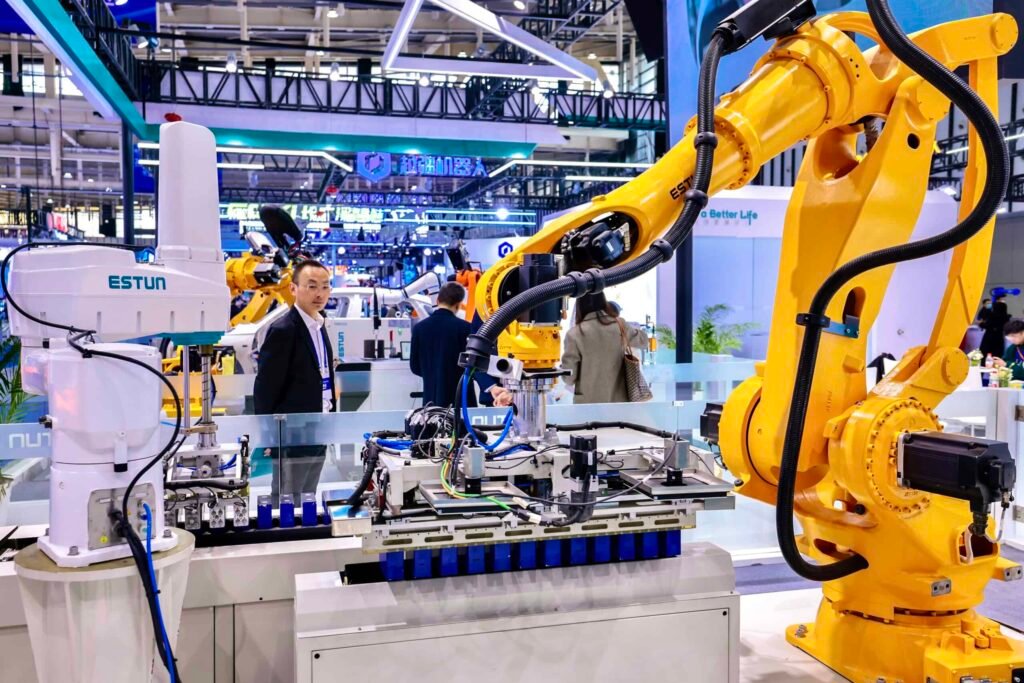
Industries like telecommunications, manufacturing, and logistics are emerging as early proving grounds. In these environments, AI is moving beyond scripted automation toward self-configuring and self-healing operations. The strategic goal is clear: prioritise intelligence over raw infrastructure, reduce operating costs, and reverse the commoditisation of core services.
Multiagent systems and new security risks
To achieve this level of autonomy, organisations are increasingly deploying multiagent systems rather than relying on a single model. Each agent specialises in part of a task, collaborating with others to handle complex workflows.
However, greater autonomy introduces new risks. As agents gain the ability to execute actions on their own, security concerns extend beyond traditional endpoints. Hidden instructions embedded in data, images, or workflows can become attack vectors. As a result, security strategies must evolve to include continuous governance, auditing, and oversight of AI decision-making itself.
Energy becomes the real bottleneck
As autonomous AI scales, it collides with a hard physical constraint: power. Access to compute is no longer just a function of cloud contracts or model availability, but of energy capacity.
Energy efficiency is emerging as a primary performance metric. The competitive edge will not belong to the organisations running the largest models, but to those using resources most intelligently. In this environment, energy policy quietly becomes AI policy, shaping which regions and companies can realistically scale advanced systems.
This shift also changes how return on investment is measured. Generic, horizontal copilots without deep domain knowledge or proprietary data are increasingly failing ROI tests. The strongest enterprise gains are appearing in sectors where AI is embedded directly into high-value workflows rather than customer-facing interfaces.
The end of the static application
Autonomous AI is also redefining how software is built and consumed. The traditional idea of a fixed “app” is becoming fluid. Instead of installing permanent software, users will increasingly request temporary, purpose-built modules generated on demand from a prompt and underlying code.
These disposable applications may exist only long enough to complete a task before closing. While this model promises speed and flexibility, it also demands rigorous governance. Organisations need visibility into how these modules are generated, what data they use, and how errors can be traced and corrected safely.
Data, storage, and disposable intelligence
Data storage is undergoing a similar transformation. As AI systems generate vast amounts of information autonomously, the practice of storing everything indefinitely is becoming unsustainable.
AI-generated data is increasingly treated as disposable—created, validated, and refreshed on demand rather than archived forever. In contrast, verified, human-generated data grows more valuable. Governance agents are beginning to take on the responsibility of managing this balance, automatically adjusting permissions, monitoring access, and enforcing policies in real time.
Humans, in turn, move into a supervisory role: governing the governance rather than managing every rule manually.
Sovereignty and control in an autonomous world
As autonomy increases, so does concern around data sovereignty. Organisations want assurance that their data, models, and decision-making processes remain within specific jurisdictions. Open-source software and local infrastructure are becoming critical tools for meeting these demands.
Competitive advantage is gradually shifting away from simply owning models. Control over training pipelines, deployment environments, and energy supply is becoming far more important, especially as open-source advances lower the barrier to running powerful systems.
Re-centering the human element
Despite the rise of autonomous systems, the human dimension is becoming more—not less—important. Tools that ignore tone, temperament, and personality are starting to feel outdated. AI systems are increasingly expected to understand human nuance, flagging potential workplace conflict early and supporting better communication and collaboration.
Rather than offering generic advice, these systems aim to ground recommendations in a deeper understanding of individual behavior. In this sense, personality and communication science may become the operating system that guides how autonomous AI interacts with people.
Beyond hype and thin wrappers
The era of superficial AI products is ending. Buyers are now measuring tangible productivity gains, quickly exposing tools built on hype rather than substance. Simply wrapping a large model in a slick interface is no longer enough.
For enterprises, lasting advantage will come from integrating AI deeply into operations, controlling the data and infrastructure that power it, and managing autonomy responsibly. As AI moves from experimentation to execution, the organisations that succeed will be those that treat it not as a feature, but as a foundational capability woven into how work gets done.