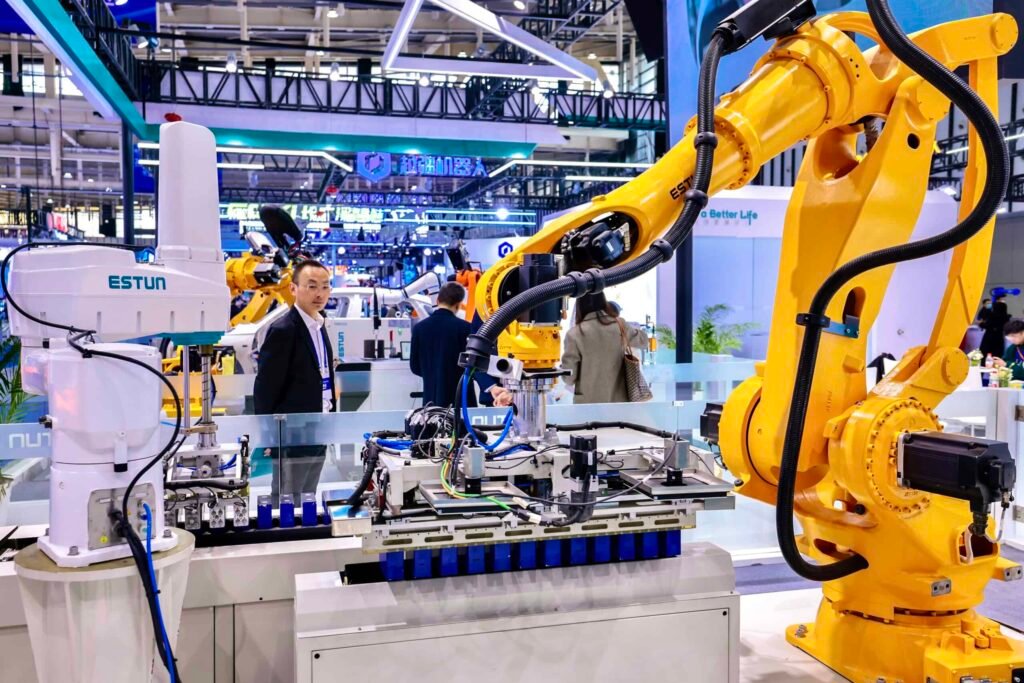
As AI moves beyond software and into the real world, the requirements change completely. Conversations between LG and NVIDIA highlight what it actually takes to bring physical AI systems from concept to reality.
This is no longer just about models and data. It is about infrastructure, hardware, energy, and real world execution.
The hidden infrastructure problem
Running advanced AI systems at scale creates a physical constraint that cannot be ignored. High performance compute clusters generate extreme heat, and traditional cooling systems are reaching their limits.
NVIDIA continues to push performance higher with dense server deployments, but that creates a bottleneck. When systems overheat, performance drops and the value of expensive hardware declines.
This is where LG is positioning itself. Instead of competing in compute, it is targeting the supporting layer by building advanced cooling and thermal management systems designed specifically for AI data centers.
The implication is clear. Future AI infrastructure will not just be about chips. It will require tightly integrated systems that manage power, temperature, and space efficiency at scale.
Why physical AI is harder than it looks
Building AI that interacts with the physical world introduces a new level of complexity.
In software, small errors can often be tolerated. In physical environments, mistakes have consequences. A robot misjudging distance or force can cause damage instantly.
For example, when a robot attempts to pick up an object, it must:
- Process visual data in real time
- Identify the object and its properties
- Calculate grip strength and movement
- Execute the action with precision
All of this needs to happen with near zero latency.
That requirement exposes a major challenge. Most current AI systems rely heavily on cloud processing, which introduces delay and cost.
The shift toward edge intelligence
To solve this, companies are pushing more computation closer to the device.
NVIDIA has been developing edge computing systems that allow robots and devices to process data locally instead of constantly relying on the cloud.
This reduces latency and lowers ongoing compute costs. It also makes physical AI systems more reliable in real time scenarios.
For companies like LG, this is critical. Their vision includes robots and smart devices operating inside homes, where delays and errors are unacceptable.
From simulation to real environments
One of the biggest gaps in physical AI today is the transition from controlled simulations to unpredictable real world environments.
Industrial settings are structured and consistent. Homes are not.
Lighting changes, objects move, and human behavior is unpredictable. Training AI systems to handle that level of variability requires massive amounts of real world data.
This is where the combination of hardware distribution and AI platforms becomes powerful. Companies with access to millions of real environments can generate the data needed to train more adaptive systems.
Why ecosystems matter more than products
The discussions between LG and NVIDIA point to a broader shift. No single company can build physical AI alone.
Success depends on ecosystems:
- Compute infrastructure
- Simulation platforms
- Hardware devices
- Data pipelines
- Real world deployment environments
When these pieces are connected, development cycles accelerate and systems become more reliable.
The automotive opportunity
Another major area where this collaboration matters is automotive technology.
Modern vehicles are becoming increasingly dependent on AI systems for:
- Driver assistance
- In cabin experiences
- Autonomous functionality
NVIDIA already has a strong presence in vehicle compute systems, while LG focuses on interior electronics and user experience.
Bringing these layers together creates a more unified system. It reduces the complexity of integrating different technologies and allows for more consistent updates and improvements.
The cost of making AI physical
One of the clearest takeaways from these developments is the level of investment required.
Physical AI demands:
- Advanced hardware
- Massive compute resources
- Real time processing capabilities
- Continuous data collection and training
This is significantly more expensive than deploying software based AI alone.
It also means that only companies with strong infrastructure and strategic partnerships will be able to compete at scale.
The bigger shift underway
The move toward physical AI represents a fundamental change in how AI is applied.
Instead of generating text or analyzing data, systems are now expected to:
- Interact with environments
- Perform tasks autonomously
- Adapt to changing conditions in real time
This requires a different approach to design, engineering, and deployment.
What this means going forward
The conversations between LG and NVIDIA highlight a simple reality.
The future of AI will not be defined by models alone. It will be defined by the systems that support them.
Companies that can combine compute, infrastructure, hardware, and real world data will have a significant advantage. Those that treat AI as just a software layer will struggle to keep up.
Physical AI is not just the next step. It is an entirely different category, and building it requires a completely different level of coordination and investment.