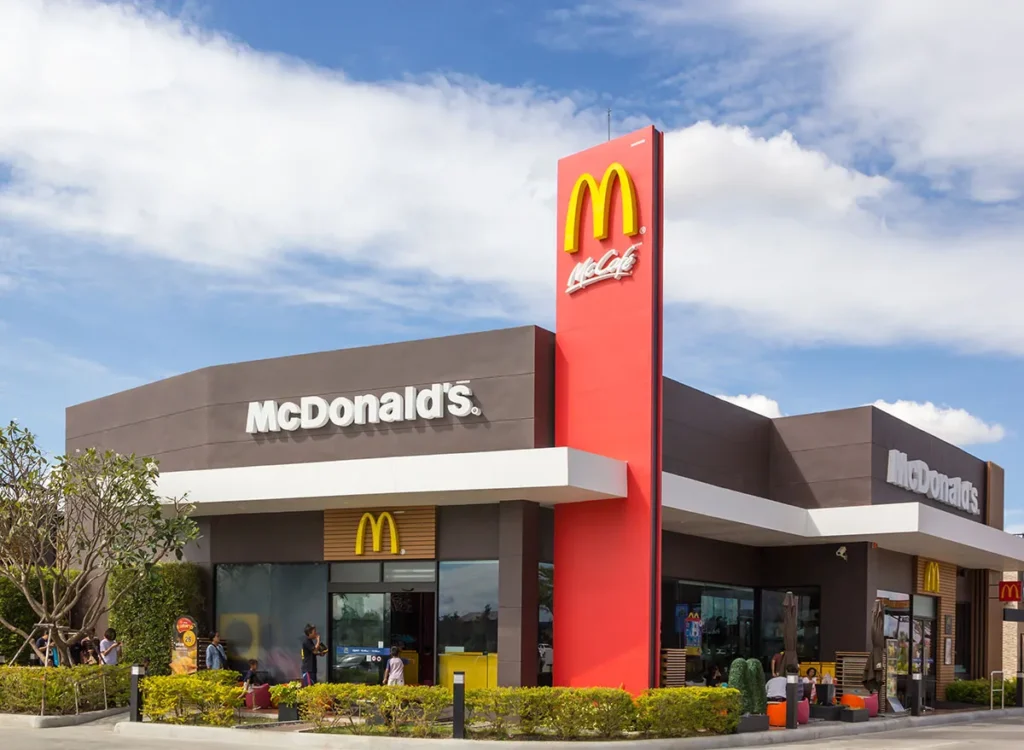
McDonald’s is using machine-learning technology to help restaurants determine menu prices, bringing AI-assisted pricing further into the company’s franchise network.
The system analyzes transaction and pricing data from restaurants and generates recommendations for individual locations. Factors such as local competition and customer sensitivity to price changes are considered when determining the suggested prices.
How the Pricing System Works
The technology processes data from millions of transactions across McDonald’s US restaurants. Rather than using generative AI, the system relies on machine-learning algorithms trained on existing transaction and pricing information.
The platform can provide restaurant-specific recommendations based on local market conditions.
Information about nearby competitors is also incorporated into the system. The platform can display publicly available menu prices from other restaurant chains, giving operators additional context when reviewing potential price changes.
McDonald’s has used AI-assisted pricing technology in some form for several years, with the system eventually developing into a proprietary platform capable of generating recommendations for individual restaurants.
The recommendations are periodically distributed to franchisees, who can use them when considering menu prices. McDonald’s says the system is optional and does not automatically determine what customers are charged.
Restaurant-Level Pricing
The system estimates customers’ willingness to pay at the restaurant level rather than calculating a unique price for each individual customer.
That distinction separates the technology from personalized pricing systems, which can use information about individual consumers to determine how much they should be charged.
The reporting does not indicate that McDonald’s uses individual customer data to generate personalized prices. Instead, the recommendations are based on broader conditions affecting a particular restaurant and its surrounding market.
Prices can therefore vary between nearby locations. Two McDonald’s restaurants only a few miles apart, for example, were reported to have different prices for the same Big Mac.
The reporting did not establish whether the machine-learning system was responsible for that specific price difference.
Franchisees Still Set Prices
McDonald’s maintains that franchise owners remain responsible for determining their restaurants’ final menu prices.
The company says individual restaurants can face different operating costs and market conditions, making location-specific pricing recommendations useful for franchisees.
Around 90% of McDonald’s US restaurants are independently owned and operated, while franchisees operate nearly 95% of the company’s locations worldwide.
The company has also increased its focus on customer value within its global franchising standards. Franchisees continue to set their own prices and can work with outside pricing advisers, while McDonald’s evaluates customer value as part of its business reviews.
Some franchisees interviewed in the reporting said they experienced pressure to follow the recommendations. McDonald’s disputed that characterization and reiterated that operators retain control over their final pricing decisions.
Growing Regulatory Attention
The use of algorithms in pricing is receiving increasing attention from US regulators.
The Federal Trade Commission has separately examined personalized pricing, particularly situations where companies use personal information to estimate how much an individual consumer might be willing to pay.
McDonald’s system is different because its recommendations are generated at the restaurant level rather than being tailored to individual customers.
The company’s pricing platform also includes an antitrust warning reminding franchise owners that restaurants may compete with one another.
McDonald’s says the warning is part of its competition-law compliance efforts and does not indicate that the company has engaged in anticompetitive conduct.
AI Pricing and Antitrust Law
Regulators have already examined the use of algorithmic pricing in other industries.
The Justice Department and FTC have argued in hotel-pricing litigation that businesses cannot avoid antitrust requirements simply because pricing recommendations are generated through software.
The Justice Department has also pursued legal action involving RealPage, alleging that competing landlords provided sensitive pricing and leasing information to software used to generate rental-price recommendations.
Those cases involve different industries and circumstances from McDonald’s, and the source does not report that US antitrust authorities have accused McDonald’s of the conduct alleged in those matters.
The Future of AI-Assisted Pricing
McDonald’s use of machine learning illustrates how AI is moving beyond customer-facing applications and into business decisions that directly affect pricing.
The company’s system does not independently set prices. Instead, it analyzes large amounts of data and provides location-specific recommendations that franchise operators can consider.
As businesses increasingly use algorithms to analyze market conditions and recommend prices, the distinction between automated decision-making and human oversight is likely to remain an important consideration for both companies and regulators.
Source: https://www.artificialintelligence-news.com/news/mcdonalds-ai-menu-pricing/