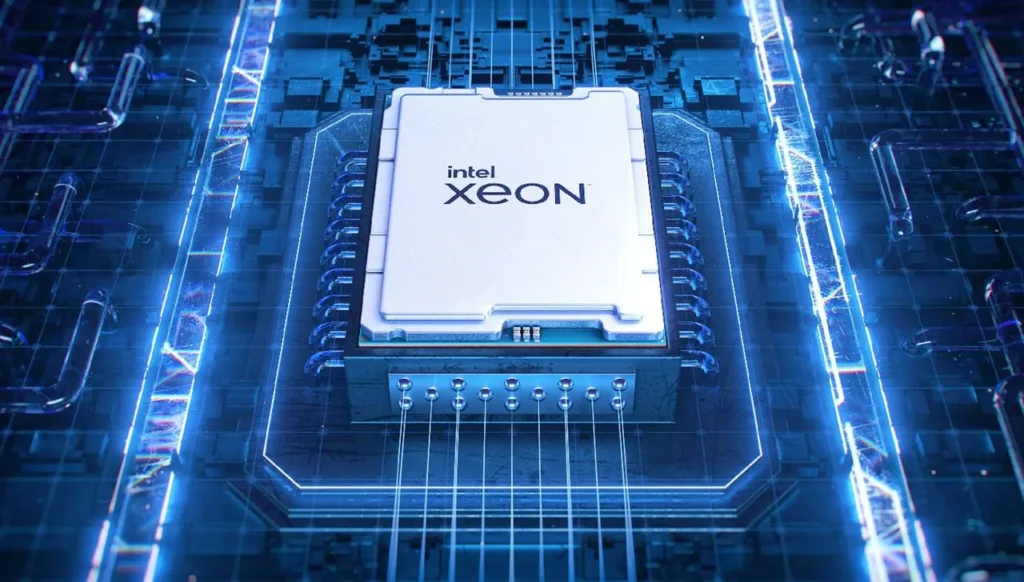
In the competitive landscape of AI processing, Intel has issued a strong rebuttal to AMD’s recent performance claims concerning its upcoming 128-core EPYC Turin processors. During Computex, AMD showcased AI benchmark results suggesting a significant advantage for its next-generation chips. However, Intel has countered with its own data, asserting that its current-generation 64-core Xeon processors surpass the anticipated performance of AMD’s forthcoming offerings.
AMD’s Bold Claims
At Computex, AMD presented benchmarks that touted the EPYC Turin’s prowess in handling AI workloads. The results depicted a scenario where AMD’s new chips, designed with advanced AI capabilities, seemed poised to leapfrog existing competition. These benchmarks were intended to highlight the efficiency and power of the EPYC Turin series, which is expected to feature 128 cores and be optimized for AI-intensive tasks.
Intel’s Response
In a detailed response, Intel challenged these claims by releasing its own benchmark data. According to Intel, their current-gen Xeon processors not only match but exceed the AI performance metrics purported by AMD for the EPYC Turin chips. Intel emphasized the role of its Advanced Matrix Extensions (AMX) technology, which is specifically designed to enhance AI processing efficiency and speed. This, Intel argues, gives their Xeon processors a significant edge in real-world AI applications.
Critique of Methodology
Intel also took aim at the transparency of AMD’s benchmarking process. They criticized AMD for not providing sufficient details about the testing environments and conditions under which their benchmarks were conducted. Intel’s stance is that without a clear and open methodology, AMD’s claims lack credibility and comparability.
The Battle for AI Dominance
This exchange underscores the high stakes in the AI processing market, where both Intel and AMD are vying for leadership. AI workloads are becoming increasingly central to various industries, from data analysis and machine learning to automated systems and more. The performance of processors in these tasks is a critical factor for many tech companies and enterprises.
Intel’s assertion of Xeon’s superiority is aimed at reassuring its customers and stakeholders of its ongoing commitment to leading the market in AI technology. On the other hand, AMD’s aggressive benchmarks aim to position their upcoming EPYC Turin processors as the new standard in AI processing.
Looking Ahead
As both companies prepare for the next wave of AI-driven computing demands, their rivalry is likely to fuel further innovations and advancements in processor technology. The tech community and industry watchers will be keenly observing how these claims translate into real-world performance and how each company adapts its strategies in response to competitive pressures.